Run it or switch it off
| Situation | Run the AC? | Why |
|---|---|---|
| Pipe leak, no musty smell, one room wet | Usually yes, with the wet room closed off | It helps keep humidity down in dry rooms |
| AC drain line is the source | No, until the line is cleared | A running system keeps adding water |
| Visible mold or strong musty smell | No | The blower can spread spores through the ducts |
| Sewage or flood water in the house | No | Contamination can reach the ducts and air handler |
| Power is out or the unit is wet | No | Safety and equipment risk |
It is the first question people ask after a leak, and the honest answer is that it depends. In Florida the AC is both the best and the worst thing to have running, depending on what went wrong.
This post gives a way to decide. If you are still unsure, call us and describe what you see.
When running it helps
If a clean water leak has wet one room and there is no smell, keeping the AC running in the rest of the house keeps humidity down and slows mold in dry areas. Close the doors to the wet room so the system does not pull moisture through the house.
Setting the thermostat a little lower and the fan on auto keeps the air moving without recirculating damp air from the wet room.
When it makes things worse
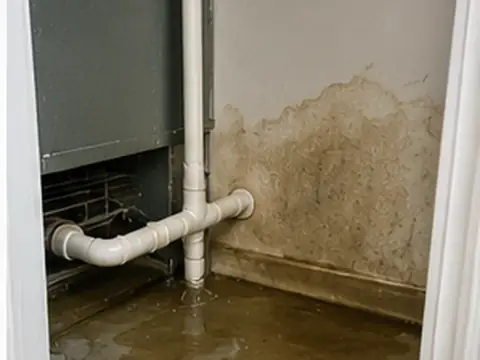
If the AC drain line caused the leak, the system is adding water every cycle. Turn it off at the thermostat and the breaker until the line is cleared.
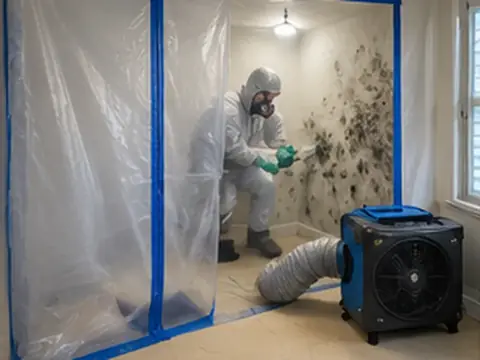
If you see or smell mold, the blower can carry spores through the ducts into rooms that were clean. Leave it off until the area has been looked at.
Dirty water and flood
After sewage backup or outside flood water, treat the AC as off limits. Contaminated air or water in the system is hard to clean once it spreads.
The same goes if the air handler or electrical parts got wet. Have a technician check the system before it runs.
Thermostat and fan settings that help
When the AC is safe to run, small changes make it better at drying the air. Set the fan to auto, so it stops blowing damp air from the coil when the compressor cycles off. A slightly lower temperature setting makes the system run longer and pull out more moisture.
A system that cools quickly and shuts off does little dehumidifying. If your AC short cycles, the house can feel cold and clammy, and an HVAC technician can check sizing and settings.
Keep supply vents open in dry rooms and closed in wet ones, so the system does not draw damp air from the wet room into the rest of the house.
Humidity numbers worth knowing
The EPA suggests keeping indoor humidity between 30 and 50 percent, and below 60 percent at all times. A small hygrometer costs little and shows whether the house is in that range.
After a leak, readings above those levels mean the air is feeding mold and slowing drying. A dehumidifier, drying equipment and a healthy AC all push it down.
If readings stay high after the wet materials have been dealt with, the AC may be oversized or not running long enough, and a technician can look at it.
What to ask an HVAC technician after a leak
If the water got near the system, an HVAC technician should look before the AC runs again. Ask whether the air handler, the ducts and the electrical parts are dry and safe. Ask whether the drain line and pan are clear and whether the float switch works.
If mold or flood water reached the ducts, ask what cleaning is needed and whether any insulation or flex duct has to be replaced.
Ask for a note on what was found, since your insurer or the restoration company may want it. Then ask when it is safe to turn the system back on, and get an answer in terms of readings or checks, not just a guess. Keep the service report with your other records from the loss.
AC problems that mimic water damage
Sometimes the AC itself is the problem. A system that is oversized, short cycles or has a dirty coil can leave a house clammy with no leak at all. A frozen coil can melt and overflow the pan, which looks like a plumbing leak but starts in the system.
If you are not sure which you have, check for a wet pan, a wet closet floor and a ceiling stain below the unit. The AC drain line clog guide walks through how a clogged line turns into water damage. If the house smells musty and nothing is wet, where to look when a house smells musty lists other sources to check.
If mold is a worry, how fast mold grows after a leak explains the timeline and what slows it. Together those posts help you decide whether the AC is part of the cause, part of the cure or both.
What to do while it is off
Without the AC, the house heats up and humidity builds. A dehumidifier with the wet room closed helps, as does moving air with a fan aimed out of a window in the wet room only if the weather is dry.
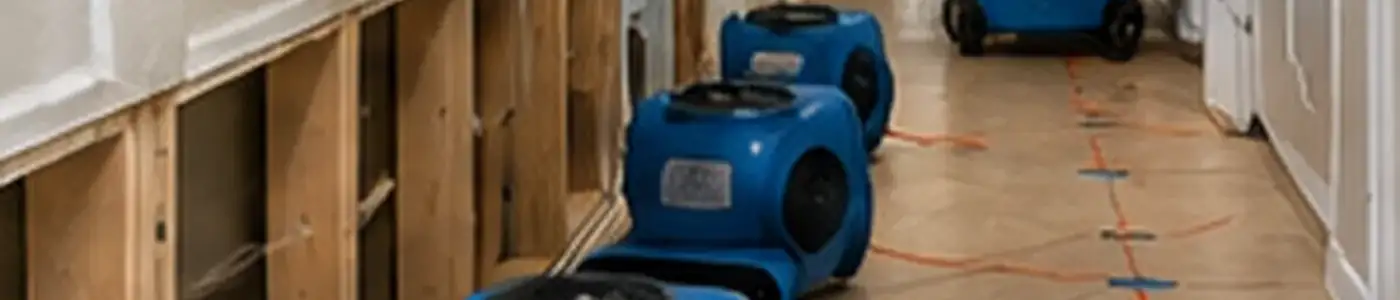
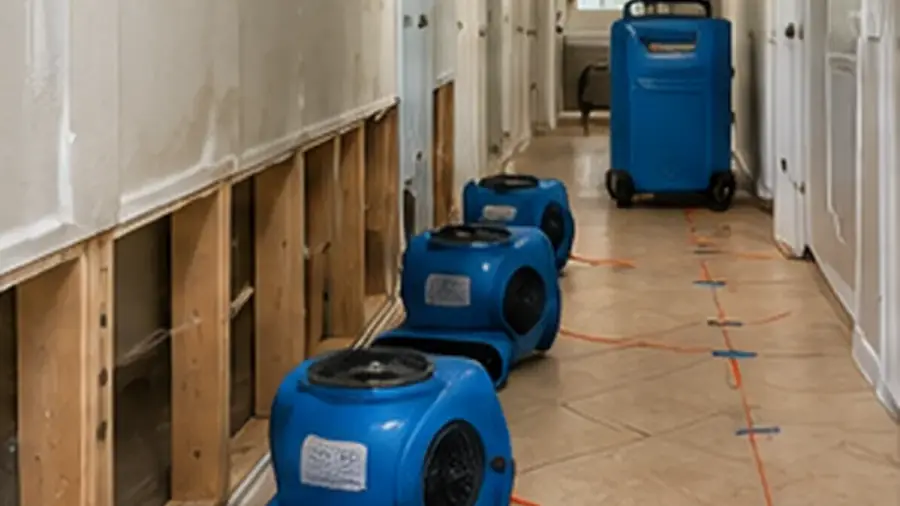
Drying equipment from a restoration crew handles this far better than household fans.
If you are not sure
Describe the situation to us on the phone. Our AC leak water damage cleanup page covers AC related damage, and owners in water damage restoration in Florida Ridge can see what applies to rentals and older systems there.
Questions readers ask
Drying timeCan the AC dry a wet floor by itself?
It helps with humidity but it does not dry wet materials alone. Drying needs air movement across the wet surface and moisture removal.
SafetyShould I change the filter after a leak?
If dust, mold or flood water got in, yes. A technician can advise.
CostDoes a flooded air handler have to be replaced?
Sometimes it can be cleaned and repaired. An HVAC technician can say.