
| Source | Category | DIY or call a pro |
|---|---|---|
| Clean sink or tub overflow, just minutes old | 1 | DIY is reasonable for a small spill |
| Washer or dishwasher drain overflow | 2 | Call us if it reached carpet or walls |
| Toilet overflow with only clear water | 2 | Call, since it may include waste |
| Toilet overflow with waste, drain or sewer backup | 3 | Call a pro. Do not clean it yourself. |
| Septic overflow or flood water from outside | 3 | Call a pro and keep people out |
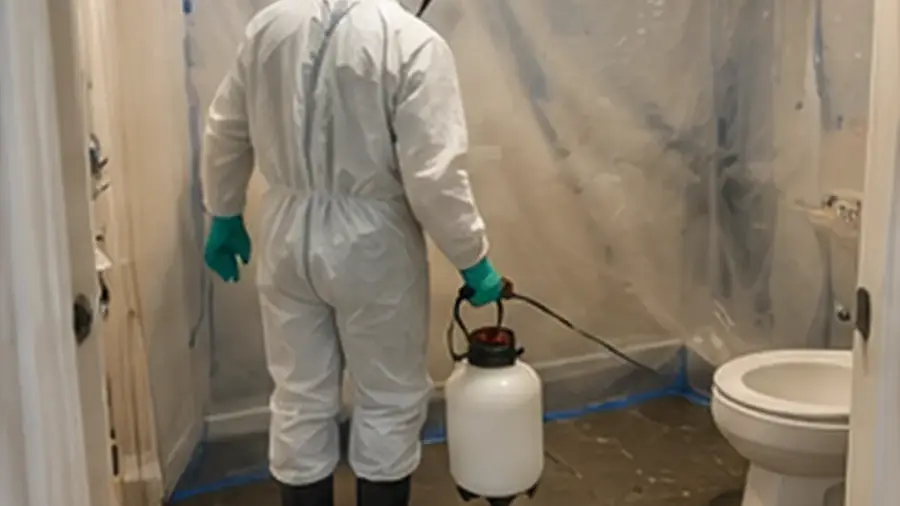
Sewage cleanup and black water removal in Vero Beach is not a mop-and-bleach job. Water from a sewer line, a septic tank or a flooded yard carries bacteria and other contaminants, and it soaks into anything porous it touches.
We treat it as Category 3 water. That means protective gear, removal of materials that cannot be cleaned, sanitizing of what stays and drying afterward. We tell you plainly what can be kept and what has to go.
Typical water category
Always 3
Mold timing
High if materials stay damp
Do this first
Stop using water and keep people out of the area
Call us if
Any backup from a toilet, drain or septic system
What gets kept and what gets removed
| Material | Usually | Why |
|---|---|---|
| Carpet and pad | Removed | Absorbs contaminated water and cannot be sanitized |
| Drywall that was wet | Removed | Porous, and contamination wicks up the wall |
| Tile and sealed hard flooring | Cleaned | Hard surfaces can be disinfected |
| Framing and subfloor | Cleaned and dried | Wood can be treated if it dries properly |
| Upholstered furniture | Often removed | Fabric absorbs contamination |
Signs of a sewage problem
- Water backing up in a tub, shower or floor drain
- Gurgling noises from toilets when another fixture drains
- Sewage smell that does not go away
- Wet or sunken ground near the septic drain field
- Toilets that will not flush after heavy rain
- Slow drains throughout the whole house
Septic and drain problems after Florida rain
Many Florida properties rely on septic systems, and the mainland water table can sit close to the surface in the wet season. When the ground is full, a drain field has nowhere to send water, and it can come back up through toilets and floor drains.
City sewer lines can back up too, especially during storms when stormwater gets into the system. In either case the first step is the same: stop using water and keep people out of the area until it has been cleaned.
How we handle sewage cleanup
- Keep everyone out. Children, pets and anyone who is not wearing protection stay away from the area. We close off the room.
- Suit up and extract. Our crew uses protective gear. Contaminated water is pumped out and disposed of properly.
- Remove porous materials. Carpet, pad, wet drywall and insulation that touched sewage are removed because they cannot be made clean.
- Clean and sanitize. Hard surfaces and remaining framing are cleaned and treated with an antimicrobial.
- Dry and check for mold. Air movers and dehumidifiers dry the area, and we check before repairs begin.
What to do while you wait
Stop using every toilet, sink, tub and washing machine in the house, because water you send down a blocked line has to go somewhere. Keep children and pets out of the affected area. Do not walk through it and then through the rest of the house, since shoes carry contamination into clean rooms. Take photos from the doorway.
Wash your hands well after any contact, and throw away food that touched the water. If anyone in the house has a weakened immune system, tell us, because that changes how carefully we seal off the area.
If the backup came from the city line and not your own pipes, call your utility too. A main-line blockage affects the street and not just your house. We keep records of what was removed and cleaned for your insurer.
Cleanup ends when the area is clean, dry and checked by meter, not when the smell fades. Odor can linger in porous materials after the visible mess is gone. If it returns after a few days, call us, because it can mean something we missed is still damp. We tell you what stays and what goes before we remove it, with photos for your records.
Questions about sewage cleanup
SafetyCan I use bleach and a wet vac on sewage?
No. A household wet vac can spread contaminants, and bleach does not make porous materials safe. Keep people away and call a professional.
InsuranceIs sewage backup covered by my policy?
Often only with a specific endorsement. Check your policy and ask your agent. We do not promise coverage, and we document the damage with photos and moisture readings.
MoldWill mold grow after sewage damage?
It can. Damp materials can start growing mold in 24 to 48 hours, so drying and removal of wet materials have to be quick.
CostWhy is sewage cleanup priced higher than clean water?
More materials come out, the crew needs protective gear and disposal is handled differently. Our estimate depends on the area affected and how much has to be removed.
Drying timeWhen can I use the bathroom again?
After the plumber has fixed the cause and we have cleaned the area. We tell you when it is safe to use the room again.