

| Tool | What it finds | Limits |
|---|---|---|
| Moisture meter | Water in drywall, wood and trim, by contact or pins | Reads a spot at a time and only a short depth |
| Thermal camera | Temperature patterns that point to wet areas behind surfaces | Shows a clue, not proof. A wet wall and a cold wall can look alike. |
| Acoustic leak detection | The sound of pressurized water escaping from a pipe | Needs the line under pressure and a quiet house |
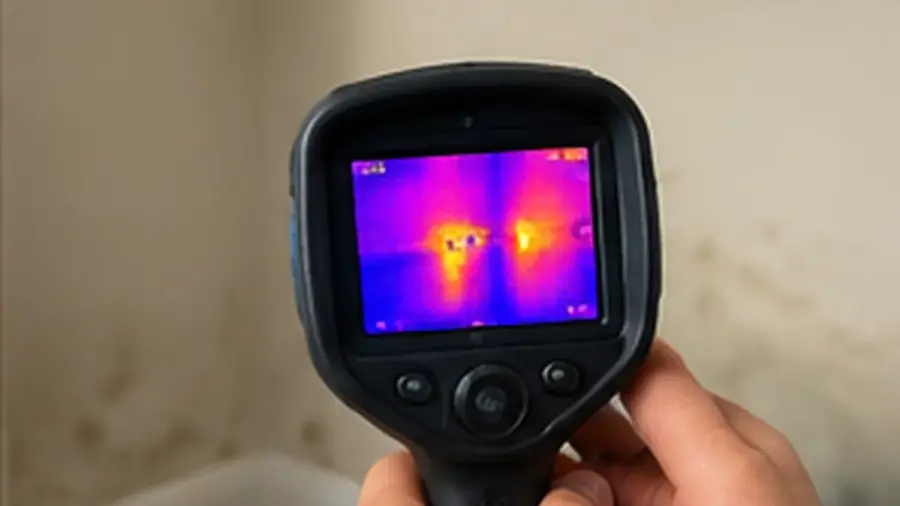
Water leak detection in Vero Beach is about finding where water is before cutting into a wall to look. A musty smell, a damp baseboard or a bill that climbs for no reason all point to water you cannot see.
We combine tools instead of trusting one. A moisture meter tells us what is wet, a thermal camera shows patterns, and listening equipment can confirm a pressurized leak. Together they usually narrow the search to one spot.
Typical water category
Not known until the source is found
Mold timing
Often found with the musty smell
Do this first
Do a meter test with every fixture off
Call us if
The meter moves or a smell has no visible source
Signs of a hidden leak
- A water bill that rises with no change in use
- Musty odor in a room that looks fine
- Baseboards or cabinets that swell or stain
- Warm spots or cool damp patches on a floor
- The meter spinning with all fixtures off
- Paint peeling in one spot on an interior wall
What each symptom usually points to
| Symptom | Likely area | Next step |
|---|---|---|
| Warm floor patch | Hot water line under the slab | Thermal scan, then plumber with line location |
| Damp baseboard on an interior wall | Supply or drain line in the wall | Moisture map the wall on both sides |
| Ceiling stain with no rain | Plumbing above or an AC line | Check above the ceiling and the air handler |
| Musty smell, nothing visible | Wall cavity, cabinet base or under flooring | Meter and thermal sweep of the room |
How we trace a hidden leak
- Ask what you have noticed. Where the smell is, what the bill did and when it started often narrows the search before we use any tool.
- Scan with the thermal camera. We sweep walls, ceilings and floors for temperature patterns that point to water.
- Confirm with meters. A moisture meter checks the suspect spots and maps where the wet area starts and stops.
- Narrow it down. Where pressure lines are suspected, acoustic equipment helps identify the likely location.
- Report the findings. You get a clear moisture map and photos, and we tell you what to hand to the plumber.
Why leaks hide well in slab homes
Lines under a slab are out of sight, and the sandy ground around them takes water without showing it. A leak can run for a long time under the floor and only appear as a warm tile or a damp baseboard in the next room.
Humidity also masks the clues. In a house that already smells a little damp, one more musty corner does not get noticed. Mapping the moisture with a meter replaces guesswork with actual readings.
A simple meter test you can do at home
Turn off every fixture and appliance that uses water, including the ice maker and any irrigation. Read the meter, wait an hour or two without using water, and read it again. If the number moved, water is going somewhere. Many meters also have a small dial or triangle that spins when water is flowing.
Then check the toilets. Add a few drops of food coloring to the tank, wait fifteen minutes without flushing, and see if color reaches the bowl. A silent toilet leak can waste a lot of water and has nothing to do with the slab.
If those are dry and the meter still moves, a line under the slab or in the yard is the likely cause. A plumber with line tracing equipment is the next call, and we can map any moisture that has reached the house.
One more tip is to write down what you notice and when. A note that the smell is worse in the morning, or that a bill jumped in a certain month, helps us and the plumber narrow the search a lot faster than a general description does.
Questions about water leak detection
CostDo I need a plumber or a water damage company to find a leak?
Both can help. We find where water has gone and how wet it is. A plumber pressure tests lines and makes repairs. If you suspect a pipe, we will work with whoever you choose.
SafetyCan a thermal camera see through walls?
No. It shows surface temperature, which can hint at what is behind the surface. That is why we confirm with a moisture meter.
MoldIs a musty smell always mold?
Not always, but damp materials often smell musty before any mold is visible. Mold growth can begin in as little as 24 to 48 hours, so the smell is worth taking seriously.
InsuranceWill my insurer want proof of the leak?
Often yes. A moisture map with photos shows where water was and how wet it was. We cannot say what your policy covers.
Drying timeDo you dry the area once you find the leak?
Yes. Finding the leak is the first step, and if materials are wet we move straight to drying once the water has been stopped.