
| Floor type | Can it usually be dried? | What fails first |
|---|---|---|
| Tile on slab | Yes, in most cases | Grout and the bond to the slab if water sits under it |
| Engineered wood | Sometimes, if caught early | Edges cup and the top layer separates |
| Solid hardwood | Often, with careful drying | Boards cup, then crown as they dry unevenly |
| Laminate | Rarely | Edges swell and the core breaks down |
| Carpet | Carpet sometimes, pad rarely | The pad holds water and may need to go |
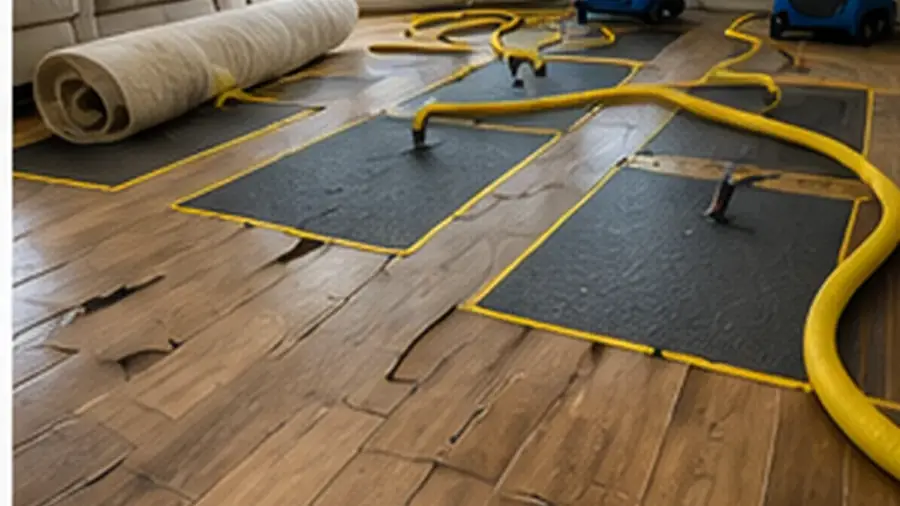
Water damaged floor drying in Vero Beach depends on what you have under your feet. Tile on a slab can often be saved, while laminate swells fast and rarely recovers. The type of floor and the length of time it was wet decide most of the outcome.
Our job is to get the water out of the floor and the layers under it before they stay wet long enough to fail. We do not pull everything up by default, and we do not leave wet material in place just to avoid a tear-out.
Typical water category
Depends on the source
Mold timing
Can start under flooring within 24 to 48 hours
Do this first
Lift rugs and keep traffic off wet wood and laminate
Call us if
Boards cup, tile sounds hollow or the floor feels spongy
How we dry a wet floor
- Identify the layers. We check what flooring, underlayment and subfloor you have, since each dries differently.
- Extract surface water. Water on top is removed so it does not keep soaking down.
- Test under the floor. Moisture meters and a thermal camera show how far water has traveled below the surface.
- Dry in place or open up. Specialized drying equipment can pull moisture through some floors, while others have to be lifted at the edges or removed.
- Confirm before closing. Readings must match a dry reference before anything is replaced or sealed.
Repair or replace, a quick guide
| Condition | Likely outcome | Why |
|---|---|---|
| Wet less than a day, clean water | Often saved | Water has not soaked in fully |
| Wet for several days | Replace more often | Swelling and mold risk go up |
| Dirty water | Replace porous flooring | Contamination cannot be cleaned out of porous materials |
| Slab damp under tile | Dry the slab first | Wet slab can fail new flooring |
| Cupping that settles after drying | May be sanded or refinished | Wood can flatten if it dries slowly and evenly |
Floors and slabs in Vero Beach
Most Florida homes have tile or a floating floor over a concrete slab, and that slab holds moisture. Water can sit between the slab and the flooring where you cannot see it, which is why a floor can look fine for a week and then buckle.
Humidity from outside makes drying harder. We usually run dehumidifiers along with the drying equipment, so the wet floor has somewhere to release moisture.
Signs your floor is holding water
- Planks that cup, crown or lift at the edges
- Tile that sounds hollow or has loose grout
- A floor that feels spongy or soft
- A darkening line along the baseboard
- A musty smell from under the flooring
- Gaps or buckling in laminate or vinyl plank
How we decide whether to lift the floor
Lifting flooring is the last step, not the first. We start with readings through the surface and a thermal scan to see if water went below. If the floor and subfloor are damp but stable, special equipment can draw moisture out through the surface and dry it in place.
If water sits trapped between layers, we remove a few boards or tiles at the edge to open it up. Taking out a small section costs less and makes less mess than replacing the room, so we try that first.
Some floors come out no matter what. Dirty water soaks into laminate and carpet pad, and once wood swells badly it will not shrink back. Where flooring has to go, we photograph the damage and take readings first so you have a record.
Ask about the underside as well. Subfloor and slab surfaces can stay damp for days beneath flooring that feels dry. A moisture reading on the subfloor before new flooring goes down is cheap protection against a floor that buckles next summer. Tell your flooring installer about the leak so they can ask for those readings too.
Questions about water-damaged floor drying
Drying timeHow long does it take to dry a hardwood floor?
Often several days to a couple of weeks for thick wet wood, and we track readings. Drying too fast can crack boards, so we aim for steady drying.
CostIs drying cheaper than replacing the floor?
Often yes when the floor can be saved, but not always. We look at the floor type and how long it has been wet before suggesting which makes more sense.
MoldCan mold grow under tile?
Yes, if water is trapped under it. Mold can take hold within 24 to 48 hours of getting wet. We check by moisture reading and, if needed, lifting a tile.
InsuranceWill insurance pay to replace my floor?
It depends on the cause and your policy. We cannot promise coverage. We record moisture readings and photos that you can share with your insurer.
SafetyCan I walk on a floor that is drying?
On tile, usually yes. On wet wood or laminate, walking can damage the floor. We tell you where to stay off when we set up.