
Example only. These are sample numbers, not a real job. Readings vary by material and meter.
| Location | Day 1 | Day 2 | Day 3 | Dry goal |
|---|---|---|---|---|
| Drywall, 2 ft above floor | 78 | 41 | 14 | Matches an unaffected wall |
| Baseboard | 65 | 38 | 16 | Matches an unaffected baseboard |
| Wood subfloor edge | 24% | 17% | 12% | Under about 15% |
| Room humidity | 78% | 62% | 48% | Back to normal indoor range |
Drywall readings are on a relative scale. We compare them against a dry wall in the same house.
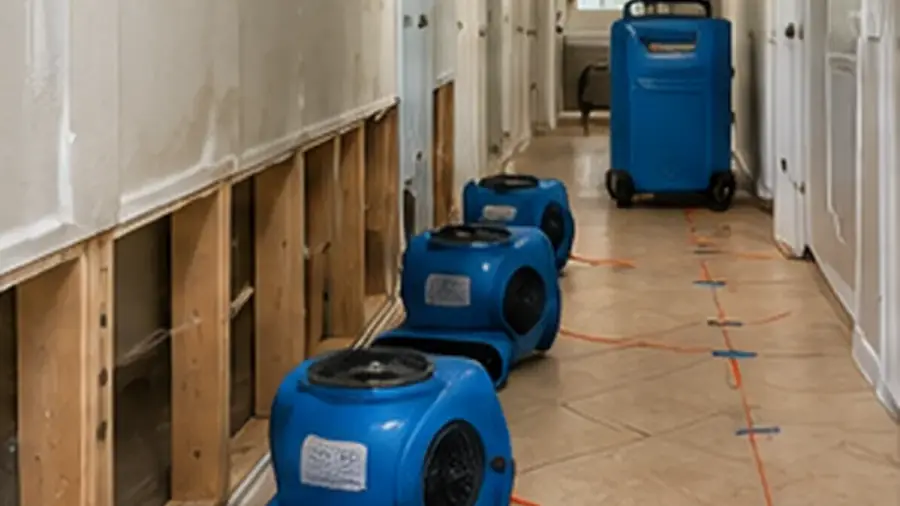
Structural drying and dehumidification is what keeps a wet house from turning into a moldy one. After the standing water is out, the walls, framing and floors are still holding moisture, and in Vero Beach the outdoor air is rarely dry enough to help.
We set air movers and dehumidifiers so air moves across every wet surface and the moisture is carried out of the room. Then we measure. The equipment stays until the readings say the materials are dry, and the number of days it takes is not set in advance.
Typical water category
Any, after extraction
Mold timing
Rises each day the structure stays damp
Do this first
Keep doors and windows closed so equipment works on the wet space
Call us if
Walls feel cool or soft, or humidity stays high
How we dry a wet structure
- Map the wet area. Moisture meters and a thermal camera show where the wet edge really is, not just where the stain stops.
- Open what has to be opened. Small holes or removed baseboards let air reach wall cavities. Wet insulation is taken out because it will not dry well.
- Place equipment. Air movers go along walls and low points, and dehumidifiers go where they can pull moisture from the whole space.
- Read every day. We record readings at the same spots each visit and move equipment if a corner is lagging.
- Confirm dry. Equipment comes out only when readings match the dry standard. We give you the log for your records.
When drying equipment is needed
- Drywall that feels cool, soft or slightly swollen
- Paint that bubbles or wallpaper seams that lift
- Floors that cup, buckle or feel springy
- Doors and trim that start to stick after a leak
- Humidity in the house that stays high with the AC running
- A damp smell that comes back after cleaning
How long different materials take to dry
| Material | Dries | What we watch |
|---|---|---|
| Drywall | Fairly quickly if opened to air | Paper facing that softens or crumbles means replacement |
| Wood framing and subfloor | Slowly, often the last to finish | Readings on the wood itself, not the surface |
| Concrete slab | Slowest of all | Surface and in-slab moisture before flooring goes back |
| Insulation | Poorly | Usually removed rather than dried |
| Cabinets and trim | Depends on the finish and the backing | Swelling at seams and the toe kick |
Drying in coastal humidity
On the Treasure Coast the air carries a lot of moisture most of the year. A closed-up house with the AC cycling off can sit at high humidity, and wet materials dry slowly into air that is already damp. That is why we use dehumidifiers and not just fans.
Concrete slabs are the slow part. They hold water longer than drywall does, and flooring laid over a damp slab can fail months later. We check the slab before anything goes back on top of it.
Estimate a typical range for structural drying
Typical range only. Your price depends on the inspection.
Typical ranges for structural drying
| Affected area | Clean water, nothing removed | Category 2, drywall and flooring removed |
|---|---|---|
| Under 200 sq ft | $250 to $1,200 | $250 to $2,900 |
| 200 to 500 sq ft | $450 to $3,000 | $700 to $7,100 |
| 500 to 1,000 sq ft | $1,100 to $6,000 | $1,750 to $14,100 |
| 1,000 sq ft and up | $2,250 to $12,000 | $3,550 to $28,100 |
Typical range only. Your price depends on the inspection.
What the equipment is doing
Air movers push dry air across wet surfaces so moisture leaves the material and enters the air. Dehumidifiers then pull that moisture out of the room and drain it away. Without the dehumidifier, the air just gets wetter and the walls stop drying.
Rooms stay closed during drying so the equipment works on the wet space and not on the outdoors. Expect windows to stay shut and the AC to be set differently while we work.
Questions about structural drying
Drying timeHow many days will the equipment run?
It depends on what got wet and how wet it got. Many jobs take several days, and a soaked slab home can take longer. We tell you what the readings show each day instead of guessing a number up front.
CostWhy is there a charge for the days the equipment runs?
Drying uses equipment that stays on site, and each piece has a cost for every day it runs. Longer drying means more equipment days, which is why fast extraction often lowers the total.
SafetyIs it safe to stay in the house while it dries?
In most cases yes for clean water, though the equipment is loud and the air is warm. If the water was dirty or mold is present, we may ask you to stay out of certain rooms.
InsuranceDo the readings help with an insurance claim?
They can. We record daily moisture readings and photos, and you can share that record with your insurer. We cannot promise what a policy will cover.
MoldWill a dehumidifier stop mold that has already started?
No. Drying stops new growth by removing the moisture, but existing mold has to be cleaned or removed. If we find it, we handle it with containment and HEPA filtration.