
- Warm spots on tile. A hot water line leaking under the slab can warm one patch of floor.
- Hissing or running water. You hear it at night with every fixture off.
- A rising water bill. Usage climbs with no change in how many people live in the house.
- Damp baseboards. Wet trim along one wall with no source in sight.
- Tile tenting. Tiles lift or crack in a line as wet ground pushes up on the slab.
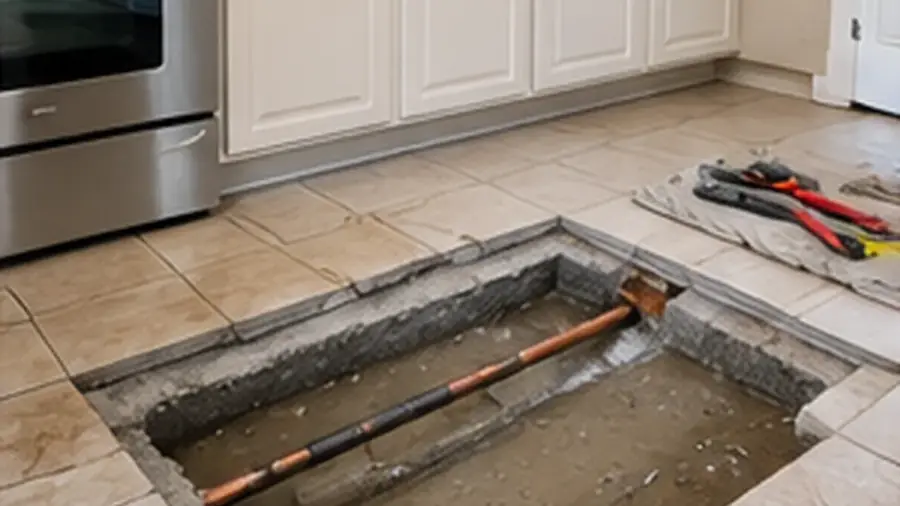
A burst pipe and a slab leak both end the same way, with water where it should not be. The difference is speed. A burst supply line floods a room in minutes, while a slab leak can run for weeks under the floor before you notice it. The cleanup after a burst pipe or slab leak in Vero Beach has to cover both the visible water and what it left behind.
We start by helping you stop the flow, then remove the water and dry the structure. Finding and fixing the pipe itself is a plumber's job. We work alongside them and record readings so the drying and the repair line up.
Typical water category
Usually 1 if caught within 48 hours
Mold timing
Can start within 24 to 48 hours
Do this first
Shut the main valve and call a plumber
Call us if
The meter moves with everything off
Slab leaks in Vero Beach homes
Most slab leaks start where a copper or PEX line runs through or under the concrete. The surrounding ground here is sandy with a high seasonal water table, so leaking water often finds the same wet soil it is already sitting in. That can hide a leak for a long time.
Water under a slab has to go somewhere. It can push up through cracks and expansion joints, or travel under the wall plate into carpet and cabinets in the next room. We check both directions before calling the floor dry.
A note on rare Florida cold snaps
Pipes in attics, garages and outside walls can freeze during one of the rare hard freezes we get here. Wrap exposed lines and drip faucets on those nights. If a pipe does split and thaw, the water shows up all at once, and the same steps apply.
Signs of a burst pipe or slab leak
- Water coming from a wall, ceiling or floor with no clear source
- A water meter that keeps moving with everything turned off
- Low water pressure at several fixtures at once
- The sound of water running when the house is quiet
- Musty smell or damp grout in one part of the house
- Wet ground or a patch of green grass near the foundation
Burst pipe or slab leak, how to tell
| What you notice | More likely | First move |
|---|---|---|
| Sudden water pouring from a wall or ceiling | Burst supply line | Shut the main valve, then call |
| Warm patch on the floor | Hot water slab leak | Turn off the water heater and call a plumber |
| Meter moves with everything off | Leak somewhere on the line | Shut the main and see if it stops |
| Damp baseboard, no visible source | Slow leak behind the wall or under the slab | Get a moisture reading before cutting anything |
How we handle the cleanup
- Shut the water off. We walk you through the main valve first. A plumber then isolates and repairs the broken line.
- Remove standing water. Pumps and extractors clear the floor so the slab and subfloor can start to release water.
- Trace the wet edge. A thermal camera and moisture meters show how far water has moved under cabinets, flooring and walls.
- Dry the structure. Air movers and dehumidifiers run with daily readings. Slabs and framing take the longest.
- Check for mold and repair. We look for mold behind baseboards and in cut-out areas, then hand the dry house over to repair.
Estimate a typical range for burst pipe cleanup
Typical range only. Your price depends on the inspection.
Typical ranges for burst pipe or slab leak cleanup
| Affected area | Clean water, nothing removed | Category 2, drywall and flooring removed |
|---|---|---|
| Under 200 sq ft | $250 to $1,600 | $250 to $3,800 |
| 200 to 500 sq ft | $500 to $4,000 | $850 to $9,400 |
| 500 to 1,000 sq ft | $1,350 to $8,000 | $2,100 to $18,800 |
| 1,000 sq ft and up | $2,700 to $16,000 | $4,250 to $37,500 |
Typical range only. Your price depends on the inspection.
Who does what on a slab leak job
A slab leak usually brings in a plumber, us and your insurance adjuster. The plumber finds and repairs the line, which can mean a spot repair in the slab or a reroute through the attic. We handle the water and the drying. The adjuster decides what the policy covers. Keeping the plumber's report and our readings together makes the claim file easier to follow.
Questions about burst pipes and slab leaks
SafetyShould I turn the power off if water is coming through the ceiling?
Yes for that room, if you can reach the breaker without standing in water. Water in light fixtures and outlets is dangerous. If you cannot reach the panel safely, call us and an electrician.
InsuranceDoes homeowners insurance cover a slab leak?
It depends on the policy and on whether the damage was sudden or gradual. Many policies treat those differently, so check yours and ask your agent early. We do not promise coverage. We document moisture readings and photos you can share.
CostIs your price the same as the plumber's repair?
No. Our work is removing the water, drying and cleanup. The plumber's bill for fixing the line is separate. Both depend on how big the leak was and how long it ran.
Drying timeHow long does a slab take to dry after a leak?
It is slower than walls or carpet. Many slab jobs take several days, and a long-running leak can take more. We keep checking until readings are back to normal.
MoldCan mold grow under the floor after a slab leak?
Yes, if wet flooring or subfloor stays damp. Mold can take hold within 24 to 48 hours of getting wet, so we check the edges of the wet area and any materials we remove.