Where the water goes when the line clogs
- 1
Coil. Warm air cools and sheds water.
- 2
Pan. Water collects in the drain pan.
- 3
Line. A clog stops the water leaving the pan.
- 4
Overflow. The pan spills into the ceiling, closet or wall.
An air conditioner in Florida pulls a lot of water out of the air. Every cycle, moisture condenses on the cold coil and drips into a pan, and a small pipe carries it away. When that pipe clogs, the water has only one way left to go.
It is one of the most common sources of ceiling stains and wet closets, and it is one of the easiest to prevent.
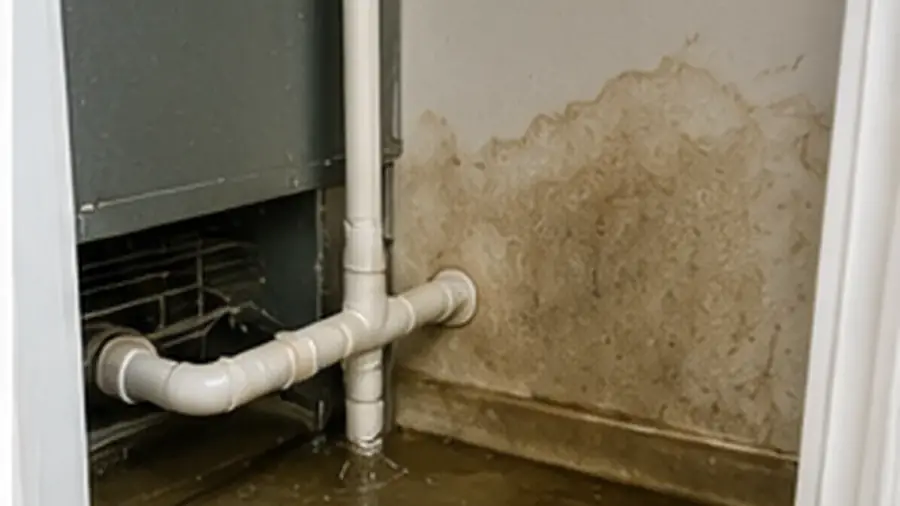
Why the line clogs
The drain line is a narrow pipe that stays wet and warm. Algae and slime grow inside it, and over months they build into a plug. Dust and debris add to it. A line that has not been cleared in a long time is the likely suspect.
Because the line is often hidden, nobody sees the buildup until the pan overflows.
The early signs
The first sign is often a system that shuts off on its own. Many units have a float switch that stops the AC when the pan fills. A system that quits and restarts after it drains is telling you something.
- Water in the pan or around the air handler
- A damp or musty smell near the AC closet
- A new ceiling stain that grows when the AC runs
- Rust on the pan or the base of the unit
What a leak does in the house
Attic units drip through the ceiling below them. Closet units wet the floor, the baseboard and the carpet outside the door. Garage units can wet the shared wall.
Because the AC keeps running, water keeps coming. Hours of running can add up to many gallons, and the wet materials stay damp in the humid air.
A simple maintenance routine
You do not need to be an HVAC expert to cut the risk. Change the filter on the schedule your system calls for, because a clean coil sheds water the way it should. Once or twice a year, have the drain line cleared and the pan checked for rust.
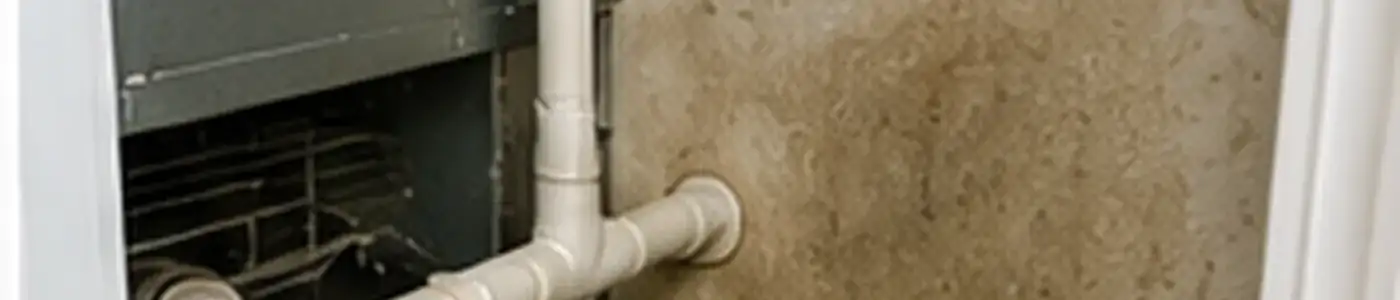
Look at the end of the condensate line outside the house in the wet season. It should drip when the AC runs on a humid day. If it never drips, the line may be blocked somewhere upstream.
If you are away for long periods, ask your technician about a float switch or a second shutoff, so a clog stops the system and not the ceiling.
What a wet ceiling needs afterward
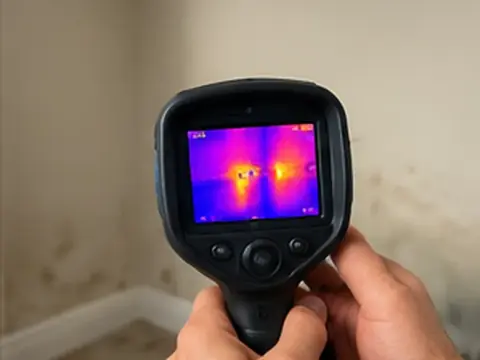
Fixing the drain stops the leak, and the wet drywall is still there. Water above a ceiling soaks insulation, and the drywall below can stain, sag and grow mold. A moisture reading shows how far the water traveled.
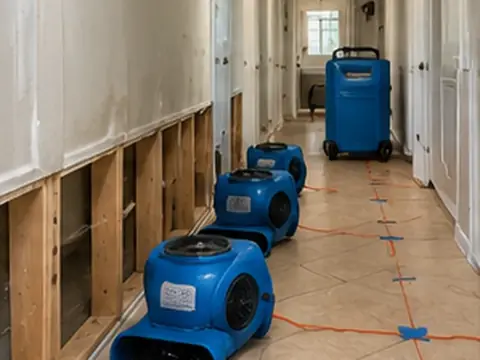
Small stains on drywall that is otherwise firm can sometimes be dried in place. Soft or bulging drywall, or insulation that has been wet for days, usually has to come out. Painting over a stain without drying seals moisture in.
Ask your HVAC technician to note what they found, since that report is useful if the leak is part of an insurance conversation.
When to call right away
Some signs are urgent enough that an HVAC technician should hear about them right away. A system that shuts off and will not restart, water dripping from a vent or light fixture, or a ceiling that is visibly bulging should all be treated as urgent.
In that case turn the system off, switch off power to the wet room if it is safe, and put a bucket under any drip. Call an HVAC company for the system and a water damage company for the ceiling.
Why a clogged line leads to mold as well as stains
A wet ceiling is the visible part. The hidden part is the insulation above it, the drywall back and the air handler closet, all of which stay damp in a closed, dark space. That combination is a good home for mold, and it can grow for weeks before a smell appears.
If you have had one overflow, check the same places again after a rainy week. Look at the pan, the closet floor and the ceiling below the unit. How fast mold grows after a leak gives a timeline of what to expect, and it explains why the first two days after a leak matter most.
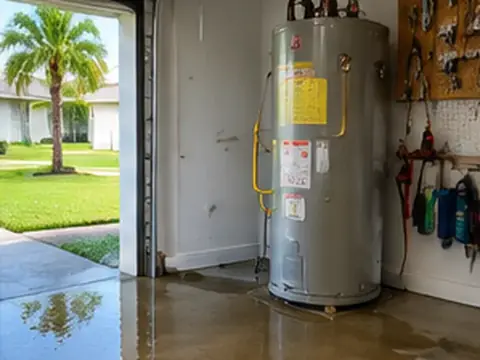
Also keep the garage in mind. Many Florida air handlers sit in a garage closet, and a drain overflow there can wet the shared wall in the same way a water heater leak does, as why the room next to the garage gets wet first describes.
Preventing a repeat
An HVAC technician can clear the line and test the float switch. Some homeowners add a second shutoff switch so a clog stops the system before the pan overflows. Flushing the line on a schedule helps, and a clean filter keeps the coil from icing over and melting into the pan.
Your technician can tell you which of these suits your unit. Whoever fixes the AC does not dry the ceiling, though, so a separate dry-out matters.
If a leak already happened
Turn the AC off at the thermostat and breaker, photograph the stain and call for a moisture check. Our AC leak water damage cleanup page explains how we dry the ceiling and check for mold, and homeowners near the river can read about water damage restoration in Sebastian.
Questions readers ask
CostIs clearing the drain line expensive?
Usually it is a small service call compared with the damage an overflow can cause. Ask your HVAC company what they charge.
SafetyCan I pour bleach down the line?
Some people use diluted vinegar or products meant for condensate lines. Ask your technician, since the wrong product can harm the pan or the line.
MoldDoes a wet AC closet mean mold?
Not always, but a closet that stays damp for more than a day or two can grow it. A moisture reading shows whether the wall is still wet.